
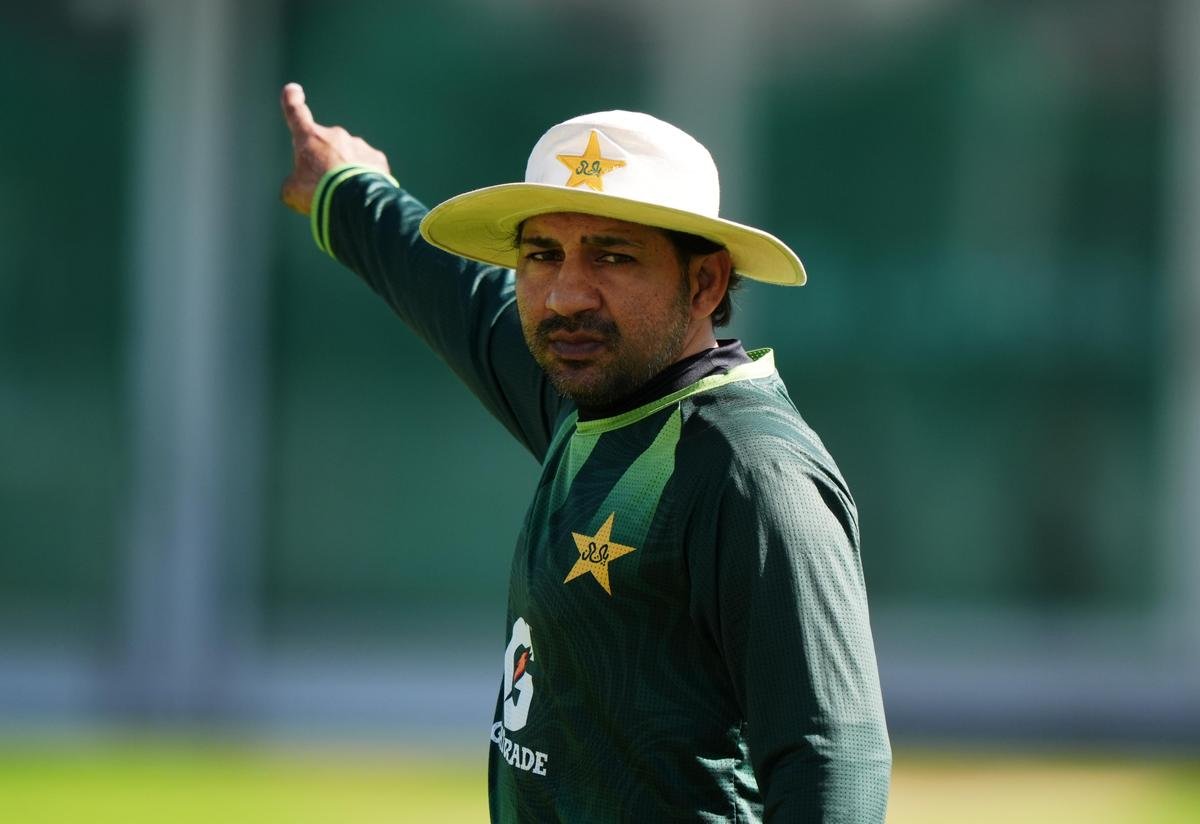
Captain on Wednesday. Dropped by Thursday. Heathrow by Monday.
There are cricket teams that respond to defeat with introspection.
They review footage. Analyse technique. Back players. Adjust tactics. Perhaps make one or two changes.
And then there is Pakistan.
Pakistan have responded to losing a Test series in England by apparently tipping the touring party upside down, shaking vigorously, and seeing who falls out.
Seven players gone. Head coach gone. Bowling coach gone.
Five uncapped replacements coming in.
And there is still a Test match left to play.
This is no longer squad rotation. This is airport logistics.
The Salman Ali Agha Experience
Nothing captures the last fortnight quite like Salman Ali Agha.
On 18 August, with Babar Azam injured, Pakistan announced that Salman would captain the country in the first Test at Headingley.
A proud moment. Pakistan’s 36th Test captain.
Pakistan then lost by an innings and 103 runs.
Salman was dropped for the second Test. Pakistan lost that one by 194 runs.
Salman has now been released from the squad altogether.
So, in the space of a three-Test series, Salman has managed the complete Pakistan Cricket Career Experience:
Captain → Dropped → Sent Home.
All he needs now is to be appointed chief selector by Christmas and the set is complete.
England Have Barely Had Time to Celebrate
The actual cricket has been grim enough.
Pakistan have batted four times in this series. They haven’t reached 200 once.
At Headingley, England won by an innings and 103 runs.
At Lord’s, Pakistan were bowled out for 110 in their first innings and eventually lost by 194 runs.
England therefore head to Edgbaston 2–0 up with the series already secured.
Ordinarily, this would produce the usual cricketing questions.
Is the batting technically equipped for English conditions?
Was the selection right? Where are the runs coming from?
Instead, Pakistan have looked at a batting collapse and decided the obvious solution is to reconstruct the touring party while everyone is still in England.
Mohammad Rizwan? Home.
Imam-ul-Haq? Home.
Salman? Home.
Khurram Shahzad? Home.
Aamir Jamal and Muhammad Awais Zafar?
Also home- despite neither playing a Test on the tour.
That takes some doing.
Imagine surviving selection, flying halfway around the world, carrying drinks for two Tests and discovering that you too have apparently contributed to the problem.
And Then They Sacked the Coaches
Because naturally we weren’t finished.
Head coach Sarfaraz Ahmed has been released. Bowling coach Umar Gul has been released.
Mike Hesson and Ashley Noffke are taking over for the final Test.
Pakistan therefore began this series with one captain and coaching combination and could finish it with substantially different players, a different captaincy arrangement and different coaches.
The third Test isn’t a dead rubber.
It’s a pilot episode.
And the replacements themselves now have a delightful assignment.
Get selected. Get to England. Get the paperwork sorted. Get acclimatised.
Perhaps locate Birmingham.
And then prepare to face England in a Test match beginning on 9 September.
Five of the incoming players are uncapped.
Welcome to Test cricket, lads.
Hope you’ve got Priority Boarding.
The Problem Is Bigger Than Seven Players
Here is where the joke stops being quite so funny.
Pakistan have every right to be furious about the performances.
Four innings below 200 is dreadful. Two enormous defeats demand scrutiny. Selection should have consequences.
The strongest argument for the PCB is actually straightforward: if the current group is demonstrably failing, why preserve it merely for the appearance of stability?
Fair enough.
But there is a difference between decisiveness and volatility.
Pakistan’s problem increasingly isn’t that they change things.
It is that change itself appears to have become the strategy.
Former Pakistan coach Mickey Arthur made essentially that argument after the latest reshuffle: constant changes to players, coaches and selectors prevent the stability and structure required for consistent performance.
And that is the uncomfortable bit.
You cannot demand patience from a batter while demonstrating none institutionally.
You cannot ask a team to build combinations when the combinations keep changing.
You cannot create accountability if nobody knows whether failure means another opportunity, a different role, a new coach or an early flight home.
Pakistan cricket has spent decades producing magnificent cricketers from apparent disorder.
Wasim. Waqar. Inzamam. Saqlain. Yousuf. Younis. Babar.
Perhaps that history has created the dangerous belief that chaos is somehow part of the magic.
It isn’t.
The talent survives despite the chaos not because of it.
Leave a Reply